
17
How Depression Support Groups Keep You Depressed
One of the reasons I was able to beat my depression is I stayed away from depression support groups.
Sounds kind of odd, right?
Shouldn’t depression support groups, well, help?
Don’t get me wrong, you should get as much support as you possibly can.
However, depression support groups often will keep you depressed rather than actually help you fix the problem.
Depression Groups Keep You Stuck
One time I felt like giving back, so I logged into a depression support group on Facebook.
I posted about how I had beaten depression and I wanted to help others. I posted for them to ask me any question they wanted.
I didn’t mention I had a website and I didn’t mention anything promotional. All I said was that I had overcome depression and I wanted to answer people’s questions.
My post got deleted.
What the hell?
Here I am, trying to simply help everyone, and my post got deleted.
I went through the group some more and everyone was just complaining.
Here is an example:
“U know what really annoying? When ur hubby comes back from being on the road. And all he does is on the phone text and more texts. Am I really that boring ? Maybe u should just not come home at all !!!
Ahhhhhh ok end rant. No wonder I’m so dam depressed half of the time.”
Then the responses:
“Why don’t you just ask him ‘Am I so boring that you have to play with your phone instead of talking to me?’!”“That’s rude I would plain ask him what’s so much more important on there then me!!??”
As you can see, I doubt those strategies will build a connection between the two people.
Here is another example of trying to help someone:
Everyone else was commenting and telling her how unfortunate she must be, how her partners and friends must be all assholes, and how the world sucks and it is horrible that we live in it.
This kind of group keeps people depressed because it reinforces the payoffs for being depressed. Payoffs can be anything from attention, sympathy, company, feeling of being right or justified, etc.
If people are coming on there and getting benefits from being depressed and not moving forwards the group will keep them stuck.
It can also be the blind leading the blind. Would you join a group about how to learn to become a millionaire and the only people in it were people that were broke and in debt?

Focusing On Depression Keeps You Depressed
I never really got much benefit from going to depression support groups. It was a bit similar to the Facebook groups and online communities except, just a little less extreme. A lot of them were also based on using medication, and after having my experience with Celexa and having a hell of a time to get off antidepressants, the advice wasn’t helpful either.
The problem with these groups is they focus on the depression like it is a disease and something to just be managed. People go on there and simply vent (which can be relieving in healthy forms) and get validation for staying stuck.
This creates a constant loop and the same people are probably still depressed a year or two later.
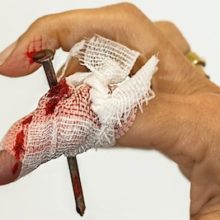
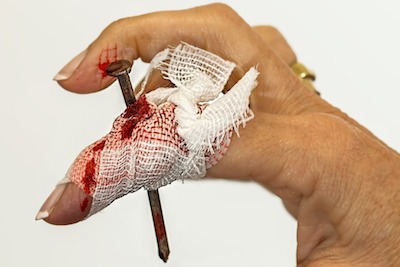
It would be like going to a support group for a nail being stuck in your finger and everyone sitting there talking about what painkiller to take and how it sucks instead of how to actually fix the wound.
Chris Kresser likes to describe fixing anxiety or depression as if you have a rock in your shoe and it hurts. You can take a strong painkiller like Advil to reduce the pain, which can help in the short-term. Or you can take your shoe off and dump the rock out, and that is what we are really after when we want to fix depression.
What Advice Would You Give This Person?
The Best Support Groups Are The Ones That Focus On Your Root Causes
I understand why depression groups exist and are the way they are. It is because there is massive confusion in our society about what depression actually really is. People think depression is a disease and can’t be fixed, instead of realizing that depression is a symptom of something else. People think that having depression means that there is something wrong with them. In reality, you have to find your root causes for depression and then fix those. When you do, the depression fades.
For example, when I was living in Thailand and Vietnam I got severe food poisoning and it completely wrecked my gut, and I probably had a parasite also (do NOT just eat all the street food you want over there).
All a sudden, after having already fixed my depression, I started feeling depressed and had severe brain fog, confusion, and anxiety. All the same symptoms came back, but this time it was from a completely different root cause.
I went onto a few gut health support groups to fix the problem and the experience was completely different.
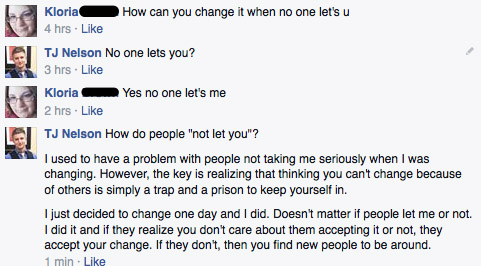
When I was in the depression group, only there to help others, people would say things like, “TJ you couldn’t be any MORE wrong!” and it was hard to have any sort of open minded discussion about the real problem. People didn’t actually want help.
 In the gut health group, people were focusing on the solution. There was some honest venting, but it was almost always like this, “Damn, I woke up this morning and felt extreme nausea. I can barely get out of bed. Anyone else experience this? What should I do?” People then thanked others when they gave advice and reported back after trying it to let us know if it worked.
With depression, everyone is so confused as to what it is that I think people forget that the whole objective is to figure out what is going on with you and then fix it. Depression, by its definition, causes negative and hopeless thoughts, which keeps people in the trap. Depression will cause people to think, “This cannot be solved!” or “There is only two types of depression, circumstantial and that which cannot be cured!” Depression itself feeds these hindering beliefs.
Depression Causes You To Think Money Is Evil
I fell victim to the idea that money was bad, and that paying someone to help me fix my depression was wrong. I just wasn’t able to identify the limiting beliefs I had about investing money into fixing my problem, probably because I was, well, depressed.
It kept me from reading books, trying out therapy, going for the doctor and paying for tests, and anything else that could have helped me escape my misery.
I’m not saying that there are honest money difficulties (I was extremely broke and almost homeless at one point), but we are all spending money one way or another. You have to find a way to redirect that to getting your depression fixed. That’s actually the best investment you could ever make, because not only will you be able to live, but you’ll make more money when you can actually think straight and get out of bed.
People in the gut health support group realized they might need to buy a few supplements or see a doctor to get their issue fixed. The owner of the group created a book to help people that took him a long time to create, and people bought it.
When you are depressed, you tend to think that anything that has a paid option is similar to the devil. Which makes sense, because again, depression itself causes the fear and doubt.
For example, I built a program that helps people diagnose their root causes and then shows you how to fix it. People tell me all the time that I should charge $200-$300 dollars for it, but I just keep it at $97 so that the site can keep functioning and it is enough so that people actually feel focused when they do it (I’ve given it away for free before, and the ones that got it for free didn’t take any action).
I even have a 60 day guarantee on there so that if you do it and there is no improvement you get your money back. This means that you either fix your depression for $97 or you simply get your money back and pay $0.00. Yet people see it as extremely risky.
Even though I have a bunch of posts and emails to help people figure out how to feel better for free, just by having a program that costs money on the site every now and then I will get a hate email from someone even after emailing them for 3-4 weeks helping them for free.
Trust me, there isn’t a lot of money to be made by creating a depression site. I do this to give back and because I’m passionate about it.
How To Move Forwards And Actually Beat Depression
The crazy thing about all this, is I used to have all those same negative thoughts. Because I was depressed. That’s why I am writing this post. It’s because I am writing it to my previous self.
And I know how hard it would be to get into the mind of my previous self and actually change the thought patterns. I know how hard it would be to shed light through the brain fog.
I used to think that therapists were messed up for charging money for their time and I never would spend anything on healthy food or any help.
The only thing that changed was my best friend (who was like a family member) died suddenly while I was already in a depression and I was sitting there by myself and just finally said screw it, I’m either going to fix my depression in one year or kill myself.
If that wouldn’t have happened, I might not have been shocked out of the mental trap that I was stuck in.
What I Wish I Would Have Known (And What Support Groups Should Promote)
I wish I would have known that I would make mistakes on the way to beating depression. It is a trial-and-error process. Nobody can tell you with 100% certainty that this or that will do it for you. You have to try it and see.
You don’t know everything about depression. If you are still depressed, then you simply haven’t figured out your depression yet. Otherwise, you wouldn’t be depressed. I fell into this same trap. I immediately would dismiss anything that sounded out of the ordinary or weird. It wasn’t until that moment I told myself that I would either fix my depression in one year or kill myself that I finally had an open mind.
Be solution oriented. Constantly remind yourself that the belief that depression cannot be cured is a symptom of depression itself. There is a way out, but when you are in the depths of depression, it certainly won’t feel like there is. You have to keep going. What other choice do you have?
Pour Conclure
Get as much support as you possibly can! Just be careful in any group that seems to be a constant cycle of people staying depressed and not being focused on the solution. Aim to figure out what your root causes are, and then work towards fixing those so that you can get out of your depression instead.
Realize that a lot of this is simply because your brain is depressed. By definition, that means that you will have a lot of thoughts that aren’t true and based in reality. Learn to identify that depression can be beat, be willing to do whatever it takes to figure out your own unique root causes, and finally break free of your depression once and for all.
How To Never Hear “Just Snap Out Of It” Again When You’re Depressed
There is a problem with depression.
Most people don’t understand what it actually is.
Which leads to all sorts of communication problems and frustrations.
It also means when people are low they feel like they can’t reach out for fear of being turned down.
Watch this video and read the article to learn how to never hear phrases like “just snap out of it” again.
The “Just Snap Out Of It” Insanity
Have you ever been told to “just snap out of it” one too many times and almost went insane from it?
Or maybe you weren’t told to “just snap out of it” but instead were slapped in the face with one of its friendly cousins.
The “Instant Relief” Versions:
- Just shake it off.
- Get a grip.
- Grow up and deal with your problems.
If “shaking it off” actually worked, the Shake Weight would be the top selling depression item.
The “Spiritual” Versions:
- You need to pray, God is all you need.
- Just be Happy (with a capital H).
- Count your blessings.
- Practice gratitude and enjoy the little things and those you love.
- Read the Bible and your depression will lift.
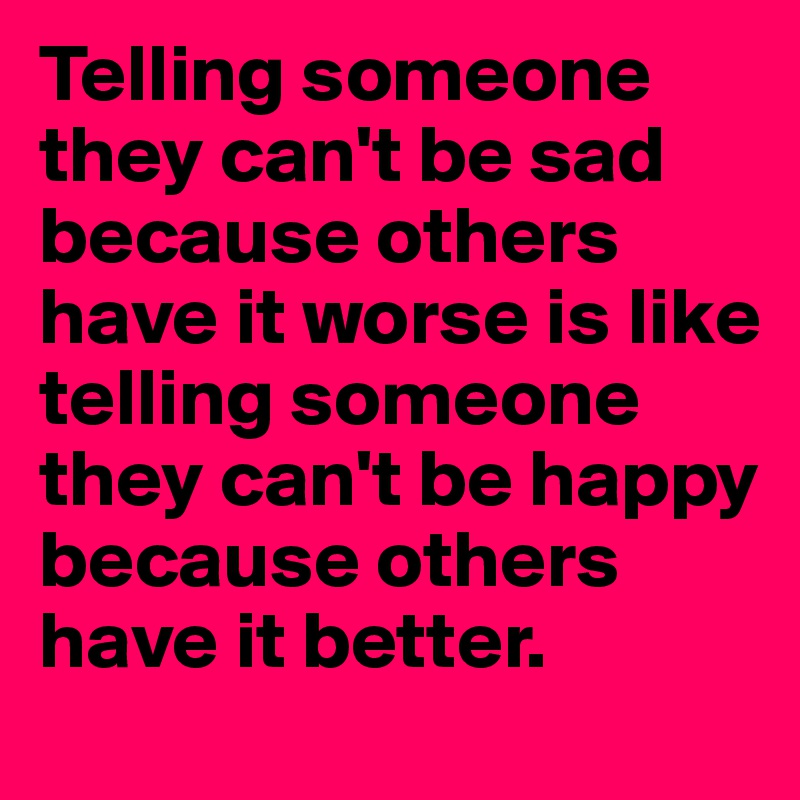
My favorite response to the “others have it worse” analogy
The “Compare Yourself” Versions:
- Think of all the people with less than you have
- There are people who have no food and are happy
- People in other countries have it so much worse, we have no right to be unhappy.
The “It’s In Your Head” Versions:
- You think too much and over analyze things.
- There’s no such thing as depression.
- Just get over it.
- Pull yourself up by your bootstraps.
The “Random Acceptance” Versions:
- Just let yourself go.
- That’s just the way life is.
- Depression is just a disease and you’ll be like that the rest of your life.
Let me know what else you have heard so I can add them to the master list.
How To Effectively Respond to “Just Snap Out Of It”
First Things First – Why They Say “Just Snap Out Of It” In The First Place
It’s one of the most annoying things to hear others tell you to just snap out of it and think positive when all you want to do is blow your head off, but we also have to understand why they say that.
The average person, especially someone that has never experienced depression, has no idea what is going on when you tell them things like, “I feel horrible and just want to die. My life sucks. I don’t see the point in going on.”
For a person that is simply “down” or “sad” all they actually have to do is go for a run and spend half a day shaking it off and they feel better! To them, a small feeling of sadness is on the same playing field as full blown depression. They have just never actually crossed into the territory of real depression, so they have no real understanding of what you are experiencing.
Once you understand where they are coming from, you can begin to form the bridge of understanding to your situation.
The Alcohol Analogy
I came up with this analogy years ago and it has yet to fail me once in helping someone else understand what I meant when I was depressed and couldn’t just do a few jumping jacks and feel better.
Depression is a physiological state that you are in and cannot get out of.
The best way to describe it is to tell the person to imagine that they just drank a massive quantify of alcohol. Choose their favorite drink and choose a quantity that would put them on their butt in a state of drunkenness. I wouldn’t recommend it, but if you really wanted to ensure they understand, feel free to get them drunk for the analogy (just kidding, but I guarantee you that would work).
Now ask them, if they were in that state of being drunk, and right in the middle of it you looked at them and said, “Okay! Now just ‘think’ sober thoughts and snap out of it! Be sober! Right now!” what would they say to you?
Exactly.
They would say there is nothing they can do in that moment to just stop being drunk.
The bridge of understanding has been formed.
Depression is Physiological and Cannot Always Be Dealt with Cognitively
This was one of the biggest turning points for me when I realized that trying to use positive thinking was actually making me worse.
Let the person know that just like being drunk from alcohol, being in a depressed state simply means something is off and you are stuck there until you get everything working correctly.
No matter how much snapping, mini trampoline jumping, shaking your body off, growing up, or comparing yourself to impoverished nations you do, that won’t correct a vitamin deficiency. No matter how many blessings your count, that won’t get rid of a hormonal imbalance.
How To Never Hear “Just Snap Out Of It” Again
An even better way to deal with someone telling you to “just snap out of it” is to never hear them say that in the first place.
We also have to realize and accept that a lot people respond the way they do is because we don’t tell them about our problems properly.
Remember, people don’t understand what depression really is. It is our job to communicate to them properly so that they can actually help us.
Instead of expressing yourself generically, try actually saying what you need in that moment.
Instead of, “I feel like killing myself,” which someone who doesn’t understand depression has no idea how to respond to, tell your friend, “I feel out of control right now and just need someone to just talk to and give me the push to find solutions. I don’t need advice or any words of wisdom, just someone to talk to and hear me out. Is that okay?”
Do you see the difference?
Instead of, “Life sucks, I don’t think I’ll ever get better, I don’t know what to do, I just hate myself,” tell your friend, “Right now, advice or words of encouragement won’t help me. I feel like I am trapped and losing hope in ever feeling better. I just need someone to remind me of who I am and go out and get something to eat or do. Are you free later today to do something for an hour? If not, no worries.”
The friend that heard the first phrase has no idea what to do. He or she feels uncomfortable, wants to help, but gets frustrated that they can’t do anything either, and just tells you, “Look, you gotta just shake it off! Go for a run and you’ll feel better.”
The friend that hears the second, clear version will know exactly what they can do to help you.
The Key To Getting Help Is Proper Communication
You’ll be surprised at the responses you start to get when you know how to talk to people about how you feel and what you need, and you’ll also be surprised at how powerful it is to set up the conversation that way.
You might find yourself actually getting what you need, and never having to hear “just snap out of it” again.
Afterwards, get out there and start figuring out what your root causes are so you can actually feel better to the point where you only have “sad” days and can go out and shake the sadness off.
9


Cryotherapy For Depression
Can standing in a cold chamber full of nitrogen make you feel better?
It’s one of those things that sounds like a new fad at first, but you never know until you experience it for yourself.
Cryotherapy has started to take off. Major sports teams like the Dallas Mavericks have been using it to improve athletic performance for many years now.
I decided to try it myself to see what it was really about.
Cryotherapy and Inflammation
Inflammation is part of the the body’s immune response when it is protecting itself from harmful conditions.
If you have chronic inflammation, you will likely experience anger, aggressive behavior, inner tension, or constantly feel bad. Your body is responding to a perceived threat. If there is no actual threat, the white blood cells can start attacking healthy organs or cells.
The chemical signals released by these attacked cells can cause a wide range of problems and pain. Cryotherapy’s main objective is to reduce inflammation.
How Does Cryotherapy Reduce Inflammation?
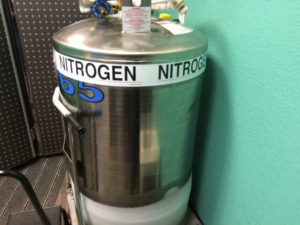 Cryotherapy is where you stand in a tank filled with liquid nitrogen-cooled air that goes to around -130°C (-266°F) for 2-3 minutes. Cryotherapy helps reverse the effect of inflammation by constricting the blood vessels. It is similar to using an ice pack on an injury, except this time your whole body is in an ice pack, which causes a whole lot of other cool things to happen (no pun intended).
Short bursts of cold can even help increase the antioxidants glutathione and superoxide dismutase, which can improve overall day-to-day functioning.
Since you are on this site, you’re probably looking at ways to feel better, especially mentally. Chronic inflammation can be caused by multiple factors, such as pollution or poor diet, and some people have even gone as far as to say that depression is really just a symptom of inflammation.
Cryotherapy for Depression
A large body of research now suggests that depression is often associated with a low-grade, chronic inflammatory response and is accompanied by increased oxidative stress.
Like we talked about earlier, inflammation can cause a whole host of problems, such as reduced appetite, pain, and even making it harder to sleep.
 In 2015, there was a study conducted that found that people with depression had 30% more inflammation in their brain than those that didn’t have depression.
One study conducted found that depression is often present in inflammatory illnesses, and even 1/4 of people who take interferon, a medication for hepatitis C that can cause inflammation, develop major depression.
It turns out that inflammation produces cytokines which cause neurological symptoms just like depression does.
Antidepressants have been shown to reduce these cytokines and this can explain why some people see a big difference when they take them.
However, make sure to read all the comments in my article about getting off antidepressants and my experience taking Celexa before opting for the band-aid solution that antidepressants often are.
Cryotherapy for Anxiety
Cryotherapy produces a lot of endorphins after you get out due to the body reacting to the stress of being cold. Anxiety and depression are often two sides of the same coin, and the same beneficial effects we get with reducing inflammation affect anxiety as well.
If you have ever felt anxious and noticed your anxiety went away or was reduced after going for a hard run or after lifting weights in the gym, stepping out of a cryotherapy tank can feel the same way.
My Own Experience Using Cryotherapy
After going through a lot of stress with a new job and dealing with chronic health issues, I got to the point where my cortisol was off and inflammation was high in my body. I was having a hard time sleeping and would get pain behind my eyes, joint pain, headaches, etc. from eating food and daily stressors.
A doctor told me that if I didn’t slow down and heal myself, my adrenal glands could get really messed up and leave me with long-term problems.
I put on the brakes for a few months with work and at at the same time I heard about cryotherapy from my manager.
Like anything, it’s better to just try it and see what happens instead of thinking about it forever. So I did. The first time I went in I left feeling great and I slept better that night.
I then went to around 6-8 different places to do their introductory sessions and see who was the best.
Not All Cryotherapy Locations Are Equal
Different locations left me with different experiences. One thing I found surprising was that some of the tanks I got in didn’t even feel cold, and only a few of them I left feeling really cold.
I could tell a cryotherapy tank was cold when my stomach area felt different afterwards, like a warming up feeling internally. That was most likely due to my blood flowing to my organs, which means the cryotherapy accomplished what it was meant to accomplish.
Another factor that people don’t mention is the staff. Someone always comes in with you to monitor that you don’t look down, breathe in a bunch of nitrogen, and pass out. Some places were really awkward and I dreaded going in and having to force a conversation with a staff member that clearly didn’t care about anything I said. Other places were laid back and easy, which made it easier to want to go in and do the session.
I found one with cold tanks and great staff and signed up for a monthly membership which was $175 per month. I lived in Dallas, and I have learned that cryotherapy is cheaper in Dallas-Fort Worth than most places. Going every single day was equivalent to paying about $5-$7 per session. When it comes to health and improving your quality of life, it’s important to invest in your self and not be cheap. What’s the point of life if you feel like shit all the time?
I went everyday for 3 months and noticed a big improvement in my overall well-being. They say that you don’t build a tolerance to it, but I did notice that I didn’t get as cold after a while and didn’t feel the effects as strongly. When I wouldn’t go for a while and return, I would get the warm feeling in my belly again and leave feeling energized and alive.
Some Locations Have a Wide Range Of Slippers to Choose From
Should You Use Cryotherapy For Depression?
I’m not sure, but you will never know unless you try it.
Most places allow you to pay $10-$20 to try it out one time and see.
You’ll either lose $20 in the journey to healing yourself and learn that it doesn’t work, or you’ll find something that helps you heal and fix your depression.
Cryotherapy is interesting because it looks like it is going to be unbearably cold and painful, but taking a cold shower is harder than doing cryotherapy.
Like I mentioned earlier, just make sure you are using a good facility. You might have to try a few places before deciding whether or not cryotherapy works for you.
After you hop out, write us a comment below and let us know how it went, as long as your fingers aren’t too cold to type :).
Jenny’s Success Story | From Depression to Back in College

The following is a guest post by Jenny.
She is proof that it doesn’t matter how long you’ve struggled, if you’ve had alcohol or drug problems in the past, if you had a rough time growing up, etc.
I love success stories because by definition, depression makes your brain think that you can’t beat it and that nobody ever does. We see all the bad stories but never see the countless people that overcame depression.
Enter Jenny’s Depression Success Story
From a young age I’ve always felt overwhelmed by my feelings, unable to process them in the same way others seemed to do. Dark thoughts, constant negative self talk, that voice always telling me I’m not good enough. I would question everyone’s motives and intentions believing that people were out to harm me, always feeling as if I’m fighting a battle, every single day.
I had a lack of energy and motivation as well as the hopelessness that things would never change. I would isolate myself, not be able to stand people physically being near me when I was at my worst and it’s something that’s made it very difficult for the people around me, especially those closest and as a result my relationships have suffered over the years.
I’m 41 now and have fought, resisted, battled, questioned my ability to cope with life, how I’ve always reacted negatively to life since my very early teens. Back then it was dismissed as is in a lot of cases as teenage angst etc except it never really left me. I had a difficult relationship with my father and for many years I was the ‘victim’ of a troubled childhood and that was something I used in turn as a reason or excuse for how I behaved. My father was physically abusive towards me and we would clash, often violently and this pattern continued right up to 21 years of age, yet I had two older siblings and their experience wasn’t anywhere like my own.
I became familiar with self-harm in my teens right up to 31/32 years of age when I severed the artery in my right hand. I had multiple suicide attempts which with hindsight were desperate cries for help because I didn’t understand why I was so different to everyone else, or so I thought.
I was and still am to some extent reclusive, I struggle in other people’s company yet I can get on with almost anyone and few people would really know what it takes for me to make the effort to engage with them. it was in my teens I discovered alcohol, drugs never really interested me as they were for really messed up people I thought. Anyway, it took twenty odd years of drinking before I admitted finally I am an alcoholic and that’s okay today, I’m six 1/2 years sober.
In that time I held down jobs, lost them, never had an adult relationship except occasionally with married men as I was too messed up to let anyone close enough, I got pregnant at 23 and my daughter is now 17. Through all this I saw various counsellors, tried numerous therapies in fact we got to the point where the professionals concluded I could probably teach them a thing or two and talking never really proved a practical enough solution to me. Medication didn’t really help, it never did, I was ‘resistant’ to it so what was left?
I clearly had dual diagnosis of depression and alcoholism and my mental health tag has changed a few times over the years but it was 18 months ago when I was left with nowhere else to go I couldn’t tolerate medication at all, less so since becoming sober, I didn’t want to go back to drink because I knew with absolute certainty there would be no coming back again.
Still struggling with the death of my beloved mum nearly 12 months before, whom my daughter and I had always lived with and I had cared for during serious, eventual terminal illness the previous five years, this was the one woman who had never given up on me, had in fact been the only reason my daughter hadn’t been removed from my care.
I was also looking at the end of my relationship with my partner, the only person in my life I’d ever let so close, who’d supported me during my mum’s final month’s/days/hours but my behaviour had become uncontrollable, unmanageable and he couldn’t stand it anymore.
I couldn’t blame him either, plus he lost his own dad a few weeks later. So in what seemed like a very deep hole with no way out one night, like many others I was searching the internet in the hope of answers, breaking my heart at suicide sites for those poor people and their stories, even whilst thinking I couldn’t stand it anymore myself, silently cheering them on to live, surely there had to be something to grab hold of?
I came across Dominate Depression that suggested something called amino acid therapy, I’d never heard of it before, ever and I’d become a bit of a fitness buff (I’d lost six stone and got quite physically fit but neither did that answer the problems in my head). By this point I was ready to try anything there really wasn’t much left for me and as much as I love my daughter I was literally fighting to stay alive for her.
I slowly started buying some of the suggested supplements and I really appreciated the honest and informed account. Something about it resonated with me and I’m so glad it did. Sadly the solution didn’t come in time to save my relationship, too much damage had already been done but I survived.
Finding the website that night I was at my lowest point in years, dark didn’t even come close to the hole I felt I was in and I wasn’t even sure that I wanted to get out anymore. The emotional pain had become physical, everything hurt and I just couldn’t seem to find anyway of making it better. The fact I had yet again gone to my GP to try antidepressants which only made things worse made me question if there was anything that could make a difference. You trust your doctor, when they can no longer help you kind of think that’s it. I have a diagnosis of PTSD and the last antidepressants that tried left me awake all night and hallucinating, what with the struggle I have with night terrors already I was absolutely terrified.
The concept of amino acid therapy in the beginning at least gave me something to hold onto, a hope that there was something else I could try and that wouldn’t have the horrific side effects of antidepressant medication. I won’t say it’s a miracle cure, I’ve been doing it for about 8 or 9 months now but the difference is marked and I would state with certainty I wouldn’t be in as good a shape as I am today without it.
For the first time in my life I’m coping with life without medicating with alcohol, painkillers (prescription AND over the counter) or antidepressants that either wipe me out or make me feel worse. I will not pretend that all in the garden is rosy but that’s life and there is a way of helping yourself when nothing else seems to work, or when professionals don’t know what box to put you in and just leave you to either get better or die, stark but true sometimes.
I try various aminos which I’ve researched and used a number of books and this site to help inform me, if you can afford to seek professional guidance I would say that’s a start.
These days I’m back at college, with a brilliant group of people studying towards a career in support work which I also volunteer in. I was also lucky enough to be asked to do some work for a body that inspects medical and health facilities, providing official reports to the government, so I like to think I’m also helping patients like myself too.
My relationship with my daughter is much improved and she is someone I’m incredibly proud of, my mum is still gone, as is my partner but I’m still here.
Regards,
Jenny
How To Help Your Teenager with Depression with Jennifer C.

I was interviewed by Jennifer who recorded conversations with multiple health experts for her Health and Happiness Movement.
We talked about how a healthy body will produce a healthy mind (most people only focus on the reverse), how to beat depression without medication, and also what depression was like for me as a teenager.
If you have listened to my interviews before, a lot of this will be familiar. However, I haven’t shared what my experience was like as a teenager too often.
Listen in to learn more about how to beat depression without medication and if you want to get perspective on how to help your child or understand what a younger adult experiences while suffering from depression.
The Healing Process From Depression By Shaving With Chainsaws

I was interviewed by Christopher Browning, a business and career coach for men at Shaving With Chainsaws, about overcoming depression. Chris had been suicidal before and has personal experience with being in the “state” of depression.
He also has an amazing moustache.

We talk about defeating depression, the natural healing process, unique insights for men suffering from depression, and our own personal stories.
Click play below to listen to the podcast:
Download (22.3MB)
Books Mentioned in the Podcast
Learn more about my experience skydiving while depressed by clicking here.
I always love talking to people that have actually been there and made it out to the other side healthy and alive and hear their perspective as they reflect back on what it was like to be depressed.
Many of us are familiar with suicide stories, failures, and sad stories but we forget that for every sad story out there, there are many people that succeeded in overcoming depression.
Let us know in the comments if you have any questions.
6

How To Lose Someone Without Spiralling Into Depression
 The person you love is gone.
They either passed away suddenly without warning or you knew it was coming.
After they die, it’s easy to do all the wrong things.
It is easy to try to continue on like you are OK and suppress the emotions.
To get on with life because, well, the person that died would want you to!
Yet, the more pain you feel, the more you heal.
The more you allow yourself to feel, the more alive you become.
The more you numb yourself out, the more dead you become inside.
The person you loved died physically. For you to numb out would be to join that death with them internally.
This is a vulnerable moment where life’s greatest pain and lessons come to the surface. If you try to opt-out from this painful period, you’ll collapse over and over again.
How NOT To Deal With Grief And Loss
I experienced both losing someone suddenly and losing someone where I knew it was coming. I’ve bottled it up and hid my feelings. I’ve allowed my feelings to express themselves fully.
The first time I experienced someone dying was my older brother. We didn’t have the best relationship. One day he only ate half of a hamburger and a little over a month later he died. He had a rare form of peritoneum cancer (if you search on google all you will find is peritoneal cancer) that once discovered, only took a month to take his life.
During that month, I didn’t step up and talk with him. He had a lot of friends and people seeing him all the time. I was in a state of shock and didn’t fully believe it was going to happen. I didn’t know how to assert myself and my needs.
Finally one day, I had my chance to spend time alone with him when they sent him home under the care of a hospice worker. I went into his room and sat down.
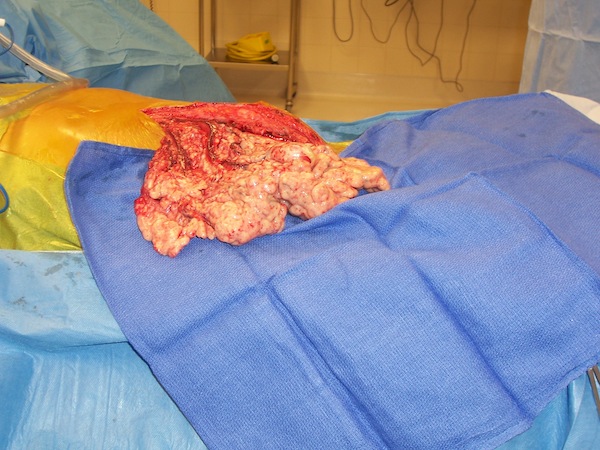
After only a few minutes, the cancer was slowly tearing away at his stitches holding together a massive incision on his stomach. He started yelling as loud as he could. He grabbed me and looked deep into my eyes and screamed, “GO GET A SHOTGUN AND SHOOT ME IN THE FACE!”
Actual picture of around 10% of his cancer that was ripping apart his insides
When the ambulance arrived, I got in the front seat and directed the driver on how to get to the cancer institute (he wasn’t sure). My one chance to settle things, to talk to him, to express myself, was lost.
One morning later I woke up to a phone call. I drove down to the hospital and saw bile dripping out of his mouth. He was gone. After a while of sitting there in the utmost worst pain a 16 year old could experience, the final zip of the body bag sealed this unreal pain’s mark on my soul.
Bottling In Emotions
Immense numbness followed. Life didn’t seem real. I would be floating about as if everything was good in a dissociative way, then I would randomly break down.
I remember laying in my bed at night and my body randomly shaking from the pain. I would listen to A Momentary Lapse Of Reason album by Pink Floyd and drift away into an array of fantasy worlds to try and numb the pain.
My family was torn up. I can’t speak for others, but I think we all lost a bit of ourselves. They say that a loss like this can bring a family together, but in my experience and witnessing other families, I think it can sometimes numb people out to each other. It’s like losing an integral part of yourself and of the family unit. Nothing is really ever the same.
Suddenly loving and caring about someone doesn’t seem as safe anymore. Nobody is born equipped on how to properly express such dark, deep, emotions.
I was lost in school. How could I relate to anyone my age after experiencing such a loss? When asked in class to talk about my summer, the real answer would have been to say, “I witnessed my brother’s stomach slowly get torn apart by cancer and he screamed in my face to blow his head off, now he’s dead and I feel completely numb and messed up.”

A few months later, I was introduced to marijuana. What a wonderful, wonderful escape.
Drug Addiction, Suicidal Thoughts, And Despair
Before I tell you about how I used drugs to escape the pain of the loss of my brother, it’s important to note I was already slightly depressed before it happened. At that point in my life, I actually had an amazing group of friends. I had a lot of people around me. My life was finally starting to turn around and I wasn’t nearly as depressed as I was in Junior High. After the death of my brother was one of the darkest periods of my life.
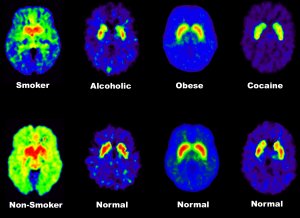
People always debate about whether or not marijuana is bad or not. Let me give you the answer: it is if it is bad for you. Addiction is never about the drug or addictive behavior. It is about deeper pain and emotions going on that need to be numbed out. Addiction is your brain telling you, “You don’t have to feel this, smoke instead.”
The drugs are the smoke on the fire. It is just that with drugs, once you go down the rabbit hole, your brain starts to rewire it’s reward system and down-regulates all its receptors. Congratulations, you now have to use drugs to feel normal and if you ever want to quit, it will take months to a year to feel like yourself again.
When I would smoke weed, I wouldn’t just take a couple tokes and sit back to watch TV and laugh. I would smoke until I was a vegetable. I would smoke until I was staring at all the houses outside the car window as they rushed by in the passenger seat completely gone out of my mind unable to communicate anything. I would smoke until I fell down on the floor, staring at my friend’s ceiling, mumbling in a messed up slur while watching things on his ceiling literally move.
For me, weed is bad.
I didn’t just smoke marijuana. I would take mushrooms every weekend, take reds a few times a week (I once combined reds with mushrooms at a rave, not a good idea), smoked salvia every single night for 2 weeks once, took LSD, methamphetamine once on accident, and a wide range of other things. I was secretly self-destructing and slowly killing myself.
My friend who was in an intense treatment center for his own drug addiction said he saw me spiral down out of control faster than anyone he had seen before.
A year or two went by and I realized I had to quit drugs. My journey off drugs was one of the hardest things I did, but I beat it. I also did it not by using my “willpower” but by solving my root issues.
Guess what? All those emotions I numbed out were on the other side of sobriety, patiently waiting for me.
PET scan showing the differences in addicted brains (top row) and non-addicted brains (bottom row)
How To Lose Someone and Properly Deal With Grief And Loss
Fast forward years later. My best friend suddenly passed away by having a seizure while driving at night. He knew more about me than anyone. It was pure unconditional love, two kids that met right around preschool and told each other every detail of their lives for 17 straight years.
I had gotten in an argument with him not long before he passed away. He was Mormon and confronted me asking me why I wasn’t. I had been abused by the Mormon church as a youngster so I had more negative views towards religion. The conversation didn’t end well.
A few days after, while sitting on my couch, I actually heard a strong voice inside me say, “Call Spencer up. You never know when someone can die.” I called him and told him I loved him and didn’t care about our argument. He died about 5-8 days later. That time, I didn’t have someone die with unresolved issues.
After he died, I just felt it. I vomited emotions out of me as if they were poisoning my body and my body wanted to violently purge them clean. I let out the pain in the most expressive way possible. I would buckle over from the pain and let the core of my being ripple out with deep despair.
I called people. I told them I was lost and just needed a friend to hang out with for a few hours. I told people I could use their support. I asked for help. I let people know I was in pain and that if they wanted to, I could use anyone to just hear me out and bounce my insanity off of.
A song randomly incubated itself into my mind a week after his funeral. I put pen to paper and wrote it down in 5-10 minutes. It just flowed from my heart as if it wasn’t even from me.
I wrote the song and played it on guitar. I played it in front of people. Years later, I played it in front of hundreds of people. The song holds a sacred part in my heart. It is what makes the pain real, keeping the effects of the relationship still alive.
I finally had enough with wasting my life away being depressed and wrote my one year suicide letter stating that I would do everything in my power to fix myself and if I was still depressed in a year I would kill myself.
In the face of my brother’s death, I chose to numb out. In the face of my friend’s death, I chose to wake up.
Feel Your Emotions, Get Support, And Never Hide Your Pain
When my brother died, I did all the wrong things. I pretended like I was alright. I numbed out with drugs. I didn’t let people in. I didn’t let people help or support me. I acted as if I had to be “tough” and just deal with it. If you want to maintain your emotional sanity, don’t do what I did.
When my best friend died, I surrendered to the experience. I respected whatever emotion came up, as if each one was a beautiful moment to not only feel my friend again, but to heal myself. Each emotion was a life lesson, a feeling that rippled from my deeper core that can never be understood by logic.
I expressed myself. I dropped the whole “macho tough guy” game and told people I was struggling. I got support.
If someone you love passes away, you can either numb it out and act like you are fine or you can allow one of the most beautiful life lessons to erupt from your inner being. You can either isolate yourself and spiral into a deep depression or you can expose yourself and let people gladly support you. You can pretend like your emotions and pain are fine and “get along with life” or you can just breathe and let your pain run its course.
If someone dies, now is the time to take care of yourself. Now is the time to slow down and let yourself process your loss.
Now is the time to let yourself go and feel fully. To feel anger towards the dead person, sadness about your future, crippling neediness and loneliness, it is all fine. Let them all run their course and don’t resist.
This is the time to look yourself in the mirror and in a deeper way than you thought possible, learn to love yourself. Learn to be alive. Learn to value your life. Learn to wake up and live before it is you that suddenly dies.
To numb out the emotions that come with grief would be to numb out one of the greatest lessons life has to offer.
3



How To Conquer Depression Without Drugs
 I sat there nervously every single day of my life.
My palms were always slightly damp. I was always on edge for fear of social interaction.
Every time I gave a presentation, I was filled with fear for a month before the event.
When I gave a presentation, my face would go beet red and a couple times I was so nervous I couldn’t even finish my speech.
Every day was filled with extreme fear and self-hatred.
That’s how my life used to be (keep reading to see a video of me speaking to a large group).
I’m always surprised now when people say, “You look so confident while speaking.”
Truth is, I still get nervous before I speak. I usually stay nervous while speaking as well.
But it is more excitement than nervousness now.
I don’t lose sleep for weeks before. And I don’t hate myself for every little mistake.
My depression and anxiety was caused by real physical issues. Now that I’ve gotten those issues handled, I’m able to push myself, and do things like speak at public libraries.
How To Conquer Depression And Anxiety
In the presentation, you will learn not only how to conquer severe depression, but also:
- The Surprising #1 Question I’m Asked That You Must Believe In The Right Answer To Beat Depression
- How This Isn’t Your Fault (And A Word About Antidepressants)
- What Could Be Your Root Cause?
- Ways To Start Healing Today
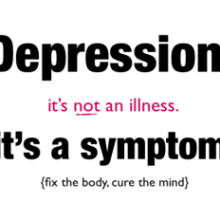
Watch the video to learn how to overcome depression for good by realizing depression isn’t a thing, it is a symptom.
Feel free to download the powerpoint slides I used while presenting to follow along:
I gave a speech at a city library with a mix of people I knew and strangers I’ve never met. I’d personally rather give a speech to just strangers, so the mix was interesting. Some people knew me back when I had severe depression, others had known only the “new me.”
In this video, I first go over my individual story. How I was told I had a disease and would be depressed for the rest of my life, how writing a suicide letter to myself led to my recovery, and the two points where hitting rock bottom brought awareness to my depression problem.
The first 30 minutes is the actual presentation, the last 30 minutes is Q&A.
How To Conquer Depression Without Medication
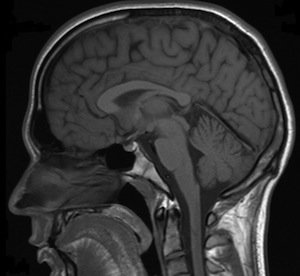
If your brain isn’t working on a physical level, you’ll feel depressed
If you want to skim the main points of the speech and watch it later, I’ll detail a few key points below.
The thing is, a lot of people are confused as to whether or not you can really conquer depression without drugs.
The truth is, you can.
The reality of depression is that there are a million different reasons for depression. You cannot just magically snap out of it by being grateful or counting your blessings. If you have had depression for any length of time, you will know that the correct answer for how to conquer depression for good is not to hope that tomorrow will be a better day or to use positive thoughts to combat it.
Never beat yourself up for not being able to think your way out of it.
I Discovered How To Conquer Depression Out Of Necessity
I learned all that I know about depression not because I wanted to grow up and be a therapist one day as a kid, but because it became my passion after working so hard at it for years and finally beating it myself.
I have a range of experiences and work history:
- Worked At A Clinical Research Facility
- Was On The DSAMH Committee For Youth
- Worked For NAMI As A Mentor
- Spoke In Front Of Doctors And Professionals About My Experience
- Degree In Psychology
I worked for NAMI, but realized they don’t offer much in terms of a drug free approach
The truth is, none of that led me to the answer. None of those experiences ultimately led me to the solution, but they gave me a wide grasp of different concepts and what didn’t work.
After skydiving and feeling nothing, losing years and years of my life to isolation and crippling depression to the point of even hearing voices in my head, to finally receiving my wake up call in life, I had written a suicide note to myself to beat depression in one year or die.
My first attempt was taking medications. My experience with Celexa failed miserably after the increased dosage caused a manic episode. When I realized I was depressed and dependent on medication, it took a serious effort to get off antidepressants. Learning how to get off antidepressants ultimately led me to the right answer.
Find Your Root Cause
I healed my depression by discovering what my root causes were.
I had:
- Vitamin D and magnesium deficiences
- Food allergies to gluten and dairy
- Sugar sensitivity
- Slight adrenal fatigue
I also used supplements like l-tryptophan and l-phenylalanine to heal my brain, get my neurotransmitter levels back, and get off antidepressants.
When I went to the doctor back when I was depressed, I was never once asked about:
- My sleep
- My diet
- My digestion
- My vitamin and mineral levels
- Hormonal imbalances
I was simply handed a pill and told to take it. That is the perfect example of treating the smoke, not the fire.
I wish I would have gotten testing done much earlier in my journey rather than just taking antidepressants
What’s funny is how there is this negative stigma towards the word “natural.” People in our society instantly distrust anything that remotely resembles natural healing.
Taking magnesium, vitamin d, fixing my adrenals, and eating right sounds a lot more sane than taking a random antidepressant, doesn’t it?
We are bombarded with messages that depression is something you need to take medication for. However, we have to remember that taking antidepressants isn’t as simple as just taking some harmless pill. They come with side effects, dependency, and severe withdrawals if you aren’t careful.
Here are some common physical causes for depression to look out for:
- Hypoglycemia
- Omega-3 to Omega-6 imbalance
- Thyroid issues
- Adrenal fatigue
- Pyroluria
- Inflammation
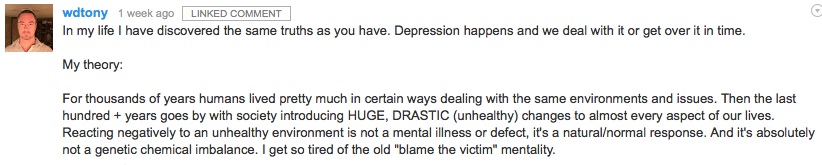
Remember, you want to ask what is causing your depression. Reacting negatively to an unhealthy environment or problems is a natural/normal response. No wonder I was depressed, I was deficient in nutrients, had food allergies, and suffering from slight burnout!
Believe You Can Beat Depression
One of the top questions I am asked usually happens like this:
“Hey TJ, I know you beat your depression and cite other success stories. But really. Can you actually beat depression?”
The answer is yes. You can beat depression. If you want more information, make sure to read my article specifically targeting this question, Is It Possible To Beat Depression?
Start Healing Today
This brain of yours is nearly 60% fat
Start eating real food. Start eating more healthy fats. The brain is nearly 60% fat. Don’t believe the “low-fat” marketing hype. If you aren’t including avocados, fish, nuts, extra virgin olive oil, butter from healthy cows, etc. you are diminishing your brain’s ability to make you feel good.
Aim to eat a portion of high quality protein with every meal. Protein contains amino acids which are the building blocks for neurotransmitters. Grass fed beef, lentils, eggs, whey protein powder, etc.
Instead of eating frosted Cheerios everyday, start eating healthy carb sources. If you are sensitive to sugar, aim to eat slower digesting carbs. Start eating quinoa, sweet potatoes, and lots and lots of vegetables!
Be careful with caffeine, as it depletes B Vitamins and inhibits serotonin and melatonin production.
Quit eating processed meats. This means bacon with nitrates, cold cuts, deli meats, hot dogs, salami, sausage, etc. The artificial ingredients and preservatives will bring your mood down.
Start cutting out vegetable oils. They contain high amounts of omega-6 fats which can tilt your fatty acid balance in the wrong direction. Vegetable oils typically are unstable and oxidize easily. Scandinavians can have a genetic inability to manufacture chemicals from gamma-linolenic acid (GLA), which is found in vegetable oils, into prostaglandin E1 (PGE1) which is associated with depression.
Nutrition is the foundation for mental health! You must get this handled. This is what I believe about people who don’t see the light when it comes to eating healthy:
If you are unwilling to change your eating habits, either you don’t know how good you can feel or you don’t feel enough pain from depression to want to change.
How To Conquer Depression Without Drugs And Stay Relapse Free
Start attacking your root causes. Find out what is making you depressed, and fix it.
Get all the support that you can. Join support groups. Reach out to people who you know can help you. Make it a burning commitment to solve depression no matter what.
Read The Mood Cure by Julia Ross or Depression-Free, Naturally by Joan Mathews Larson. Read up on nutrition. Look up Chris Kresser.
Sign up for my free email list and get daily emails for little actions you can take to start moving forwards to a depression free life.
Do whatever it takes, and it is only a matter of time that you find relief from depression.
12


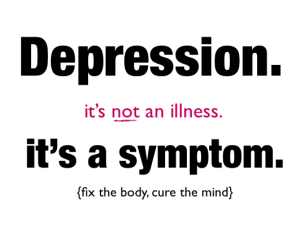
Depression Isn’t The Problem, It’s The Symptom
 You wake up.
And feel… Depressed…
Uh oh… Here it comes…
The big dark cloud of depression is starting to overwhelm you.
There’s nothing you can do now.
The depression has taken its hold.
Your mind begins to race. You worry obsessively.
You go down the dark spiral once again into a state of helplessness.
And think, “Damn you depression. You’ve got me again.”
Depression Is A Symptom Not A Disease
Thinking that depression is a disease is a myth that will bring you a lot of suffering. Believing that depression is a “thing” that you have will cause you to recover much slower.
How do I know this?
Because that is what I was told for years. I was also very, very depressed for 11 years. None of that helped me. In fact, it did a good job of keeping me depressed.
I was told by doctors that I simply needed to take an antidepressant. My therapist in college told me that I was going to have to take antidepressants for the rest of my life. I had a disease that for the rest of my life I could simply hope to manage this disease with medication.
What a shitty life I had ahead.
Yet, now I feel better than I have in my entire existence and I haven’t taken antidepressants in years. My post about how I got off of antidepressants is the most popular post on this webpage.
People are finally starting to realize that what they’ve been told all their lives about depression just might not be true. Because, well, they’re still depressed. If what they were told was true, it should have given them long-lasting results by now.
So then, what are you supposed to do if you are depressed now or are starting to get depressed?
Use Depression As A “Compass”
Learn to listen to depression and use it to pinpoint root causes
Here’s the good news: being depressed often has nothing to do with your inability to think positive 24/7 like a monk that’s been meditating for 10 years in a cave.
If you have been struggling with depression for a long time and have already tried all the cognitive behavioral experiments, quit beating yourself up.
Chris Kresser, who often talks about how depression is a symptom of deficiency and toxicity, reports that many of his patients that thought there was something wrong with them find amazing relief when they actually discover depression has physical roots. From his article, “Is Depression a Disease or a Symptom of Inflammation?” he writes:
Understanding the physical roots of depression can have a profound effect on people who are suffering from it. Although the stigma surrounding depression has decreased in recent years, many who are depressed still carry the burden of thinking that there’s something wrong with them, and the depression they experience is “their fault”. When my patients with depression learn that there’s an underlying physiological cause of their symptoms, they often feel a tremendous sense of relief and empowerment. What’s more, when we address this underlying cause, their mood improves dramatically and they quickly realize that the self-judgment and shame they felt about being depressed was misplaced and unwarranted.
I couldn’t have said it better myself.
If I ever start to feel depressed these days, I slow down and listen. Depression is telling me something, and if I relax and realize something else is causing the depression, I’m back to feeling good in no time.
What Do You Do If You Feel Depression Creeping Back In?
Another thing I absolutely hate about depression is how everyone used to tell me, “If you’ve had depression before, chances are, you will relapse.” Telling that to a depressed person is basically telling them not to try at all. Why try getting better if depression is just going to come back?
Guess what, I haven’t been depressed in years. There was one episode in Thailand when I got severe food poisoning and felt severely depressed when my gut was absolutely destroyed. Luckily, I knew what to do in case of a relapse and got myself back on track. It also didn’t just randomly “happen” out of nowhere, it was caused by a physical issue.
So much for the belief about relapsing every month into a depressive episode.
If you start to feel your mood go down or you are already depressed, I want you to try something new.
Listen to your depression and use it as a guide to finding your root causes.
Instead of freaking out and letting yourself become obsessed with the idea that you are starting down the downward spiral once again, just breathe and listen. Start asking yourself some questions.
- What is going on here? Anything significant happen recently?
- Have I been eating shitty foods? Have I been eating enough calories?
- Have I been sleeping properly?
- Have I gotten blood work done to rule out deficiencies or hormonal problems?
- Have I been eating anything like sugar, gluten, dairy, or anything else I’m sensitive to?
I’ve been amazed at how simple it has been sometimes to turn around and recover quickly. One time I started to feel down. I have an app on my phone called Sleep Cycle that records how I have been sleeping. I opened it up, and guess what. I had been getting around 5 hours of sleep for a week straight. No wonder my mood is low.
One time I wasn’t feeling too hot, then realized that I had been eating white flour tortillas from burritos and eating out almost everyday. I accepted my fate of not being able to eat burritos because of my sensitivity to wheat and gluten, cut them out again, and my mood came back.
Remember, depression is a symptom not a disease. Once you find the root cause of what is making you depressed and fix it (or fix them if you have several things going on), the depression will lift.
Common Conditions That Are Making You Depressed

Fix root causes to stop this from happening every night.
Start to see your depression as a guidepost leading you to the causes, not the actual problem itself.
Take my story for example.
I was eating McDeath all the time, I had experienced some pretty severe trauma from watching my brother die a painful death as cancer ripped apart his insides, my family had split up, I had B Vitamin, Vitamin D, and magnesium deficiencies, was slightly allergic to gluten and dairy, and had adrenal fatigue.
After my brief experiment with antidepressants and mainly my experience with Celexa, I realized there was some major changes to make in my diet. I ate amazingly healthy, took basic supplements and vitamins for depression, raised my Vitamin D levels into the optimal range, got my stress in check, mastered getting a good night’s rest, and started to feel better.
Holy sh*t I thought, I knew I felt bad, but I didn’t know I felt that bad.
Later on, testing revealed I had adrenal fatigue. I fixed that, and my energy levels started to skyrocket.
What would have happened if I would have walked into a doctor’s office and instead of quickly prescribing me a drug, he checked and saw that my blood test showed I had low Vitamin D and magnesium? What if that doctor checked my hormonal panel and saw high estrogen, low DHEA, and interesting cortisol patterns and realized my adrenals were worn out as all hell from the stress I endured?
A comment on my video that describes this situation very well
What if that doctor would have asked me what my diet was, and realized I wasn’t eating healthy at all? What if that doctor would have realized my sleep quality sucked?
You can get depressed from thyroid problems, gut issues, IBS, parasites, candida yeast, medications, adrenal fatigue, low testosterone, improper sleep, vitamin and/or mineral deficiencies, lack of exercise, food allergies, and a whole range of other things I can’t list off the top of my head.
If all of those things can cause depression, why are we told to just accept that we are depressed as if it is some life-sentence? Why aren’t these possibilities explored, especially when something as simple as a magnesium deficiency is so easy to correct?
Other Stories
With each person that I talk to, I always try to figure out basic changes and quickly try to target root causes for why their mood is the way that it is.
One person that was emailing me, I simply suggested that he try taking a high quality B12 supplement. His symptoms of being dizzy and tired all the time sounded eerily similar to just a basic B vitamin deficiency. He reported that in only a day or two, the B12 supplement was fixing his dizziness and fatigue and he was able to work through the day much easier.
Another person I just finished working with had a few more things going on. Again, it wasn’t depression that was her enemy, it was all the conditions going on that was producing the symptom of depression that we had to target.
Medications never worked for her long-term. After digging deeper, she found out her cortisol was through the roof and her vitamin d and iron levels were low. Her past diet did not contain enough fat and protein.
After fixing her out of whack stress hormones and deficiencies, she feels great now simply with stress management, good diet, exercise, and some supplements when needed.
If you haven’t read Maria’s amazing story, you deserve to. Click here to read how she beat depression and believes she has the long-term cure to her mood problems.
Using N-A-C To Fix Depression
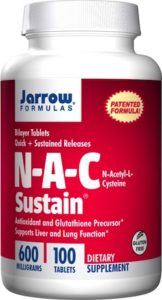 Another interesting example is Mike. His maternal side has a long history of mental illness and he struggled with anxiety and depression. After learning that N-acetyl cysteine was used for depressive symptoms in a double-blind randomized placebo-controlled trial to beat depressive symptoms in bipolar disorder (PubMed) he starting taking a simple dose of Jarrow Formulas N-A-C Sustain to raise his glutathione levels.
In this article, he talks about how he used N-A-C and other methods to clear toxins from his liver. Lowering oxidative stress, he beat both his anxiety and depression, two conditions that drug companies would love to tell you you have because you need to take their medications.
Do Whatever It Takes To Find Your Root Causes
Don’t believe the BS that you will have depression forever. Ignore the lies that depression tells you. Realize it is possible to beat depression. Know that you don’t have to take medications that mess you up with all sorts of side effects for the rest of your life in order to feel happy and have a meaningful life.
Make a commitment to yourself to investigate the possible reasons why you have depression. Learn to listen to your depression and use it as a guide and a signal to what is really going on at a deeper level.
Check out your hormone levels. Test your thyroid and adrenal function. Make sure your gut is working properly and you can actually digest foods. Actually eat healthy instead of making up excuses to continue eating crappy foods that are wrecking your mood.
Do whatever it takes to figure out the real reasons for why you are depressed. Click here to sign up for my email list to get free, actionable steps to start on the right path. Find out your root causes, then do what you need to do to correct it.
Then, you are depression free. It’s a lot more simple than society wants you to believe.
12

Is It Possible To Beat Depression?
 Is it possible to pull yourself out of a depression?
Is it possible to beat depression even if your whole family is depressed, your on medication, and you have suicidal thoughts?
Is it possible to recover from depression without medication?
Are you doomed to taking strong medications that cover up the symptoms of a condition for the rest of your existence?
Why did I decide to write about this today?
For one, I forgot how long I used to be stuck in harmful beliefs.
I forgot that depression lies to you by telling you you’re stuck and doomed. I forgot that depression tells you it is an “illness” or “disease” that you’ll live with for the rest of your life.
I forgot that at one point, doctors told me that I had a condition like type one diabetes. I would have to take strong medications for the rest of my life, just like insulin.
I forgot that in my recovery and the state I’m in now, that other people have either forgotten or didn’t know that overcoming depression is possible.
This might be the most important article you read. Almost every single one of you who signs up for my email list responds to my first question with the same answer.
Is It Possible To Overcome Depression?
I ask every person that signs up to my email list one simple question.
“What’s your single most important question about overcoming depression without medication?”
The most common response I get is, you guessed it, “Is it possible to cure depression?” or “Is it possible to get over depression?” or “Is it possible to recover from depression?” or “No, really, is it possible to beat depression if I’ve been depressed for 10 years?”
If you noticed, medication isn’t even mentioned in these questions. People aren’t just unsure if it is possible to beat depression without meds, they are simply unsure of whether or not it is possible to cure depression at all.
What this means is that it is an almost universal symptom of depression to believe that it isn’t possible to beat it. Even worse, our society and medical system is there to reinforce that belief. I had trained professionals telling me that I had a disease for the rest of my life and I was doomed to taking powerful mind altering chemicals produced in a lab until I die in order to feel normal.
The media is the most obvious. How often do we hear about someone who took his or her own life? What brings more viewers, a sad chaotic story of violent suicide? Would anyone watch if the news said, “Man slowly heals himself over the course of 6 months from depression. Says he feels happy now.”?
Why did I get so many emails when Robin Williams took his life where people thought that if he failed, they couldn’t possibly succeed? Do you or I know what it is like to be that famous or what other things he was actually dealing with?
Why do we all succumb to the belief that depression is an ailment that we will have for life? Reading statistics about depression online doesn’t help. How often have you heard, “Unfortunately, 50% of people who have one major episode of depression will relapse, and the likelihood goes up if you’ve had more than one,” in your lifetime?
Depression is downward spiral for a reason. It makes you feel horrible, which makes you question everything including the possibility of depression’s defeat, which in turn makes you feel even more horrible. The cycle goes on and on. Every relapse you experience becomes yet another reinforcement for the belief that depression simply cannot be defeated.
Depression makes you feel hopeless, hopelessness makes you feel more depressed, which makes you feel more hopeless…
When was the last time you sat down with yourself and really thought about whether or not depression can actually be solved.
Is it not true, that there are thousands and thousands of people recovering from depression? What about them? Why don’t we ever listen to the success stories?
Now that I’ve recovered I’ve often asked myself, “What is depression really?” Is depression a thing, or is it a symptom of something else going on? Is depression a disease that attacks you for no reason, or is it symptom that either something is off in your life or in your body?
What Are Some Known Or Possible Causes Of Depression?
The most commonly known triggers for depression are things like trauma, grief, financial troubles, relationship breakup, unemployment, or a big move to another city. Then there are poor sibling relationships, dysfunctional families, or a lack of purpose in life.
There is a genetic component with depression. So if you’re parents are depressed, well guess what, you now have a higher likelihood of being depressed, not to mention being around depressing parents isn’t probably helping either.
If you’re reading this website, however, I’m sure a lot of you have looked into those things and still find yourself depressed. Or, what if none of those things apply to you? Is it possible to have depression for no reason?
Other notable causes can be things like SAD, or seasonal affective disorder. This is where someone gets depressed in the winter. Shockingly, they now say that for less than 1% of SAD sufferers, it can even strike someone in the summer.
There are people who don’t react well to birth control pills and find themselves feeling depressed as a result. There are other medications where the one of the possible side effects listed on the bottle is depression.
If you abuse substances, it is possible to find yourself depressed. If you have a sudden stressful event, it can put you in a depression…
Are you getting the point? There are a lot of possible explanations for depression and we haven’t even skimmed the surface yet!
Sometimes, I believe people substitute the word depression for sadness in a lot of cases, such as moving to another city, but regardless there are a lot of reasons for feeling down or depressed.
So what can a person do?!
Possible Physical Causes For Depression
People forget that there are physical possibilities for keeping them down.
Here is a small list of possible reasons for depression that are purely physical:
- Lack of exercise
- Lack of sunshine
- Hypothyroidism
- Hyperthyroidism
- Fibromyalgia
- Candida or yeast infection
- Poor adrenal function
- Hormonal imbalances
- Hypoglycemia
- Heavy metal toxicity
- Premenstrual syndrome
- Sleep disturbances
- Dental problems
- TMJ
- Infection like AIDS
- Medical conditions like heart problems, lung disease, cancer, or head injury
What if you simply had a thyroid problem, and after getting it corrected, your symptoms of depression vanished? Have you looked into the symptoms of a bad thyroid to see if you match any of the criteria?
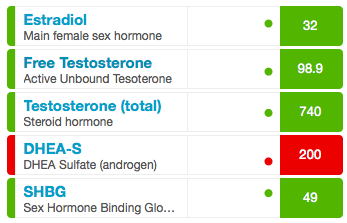
Have you looked into adrenal fatigue? The test is easy. You simply get levels of your cortisol and DHEA levels checked. I’ve done it myself.
After learning about my low levels of DHEA, healing my adrenals got my motivation and energy back.
What if you had a simple issue going on in your body and by looking deeper into that and with the proper care, your symptoms of depression vanished?
What Are The Possible Dietary Causes For Depression?
Now lets take a look at possible ways you can be depressed through your diet or food. I know that, at least in the Western part of the world, there are a lot of people that believe that diet has no role in depression or any ailment for that matter. I used to be one of those people. I also used to eat a lot of McDeath (otherwise known as McDonalds).
These days, whenever I hear that or read that diet plays no role in mental health conditions I just shake my head and wonder how we have all gone crazy and think food doesn’t affect anything.
People like Julia Ross, Joan Mathews Larson, Priscilla Slagle, Andrew Saul, and Stephen S Ilardi have been using nutrient therapy for years to cure people of conditions like depression and substance abuse effectively. Not only that, but also helping people get off antidepressants safely and effectively.
I would know, because I got started down this whole rabbit hole of actually being healthy myself after randomly picking up Julia Ross’s Mood Cure. I stumbled around in a depressive stupor, walked down to Barnes and Noble, and desperately went to the Mental Health section to find a solution to my depression in one year or kill myself and picked up her book.
As you can see, I’m still alive.
A lack of Omega-3 fatty acids is a major issue for most people. In a typical diet, Omega-6 fats are abundant and Omega-3 fats are lacking. This causes problems within the brain when it comes to neurotransmitters working properly and leads to higher inflammation, both reasons for not feeling too great.
Numerous studies have shown that most study participants were deficient in magnesium, a critical nutrient for both anxiety and depression. It also makes a great supplement to promote sleep, if you suffer from insomnia.
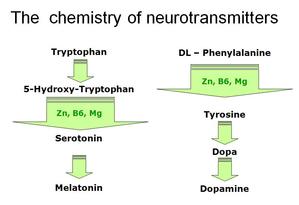
If you don’t get enough B Vitamins, you won’t have the proper cofactors in converting amino acids into neurotransmitters like serotonin or dopamine.
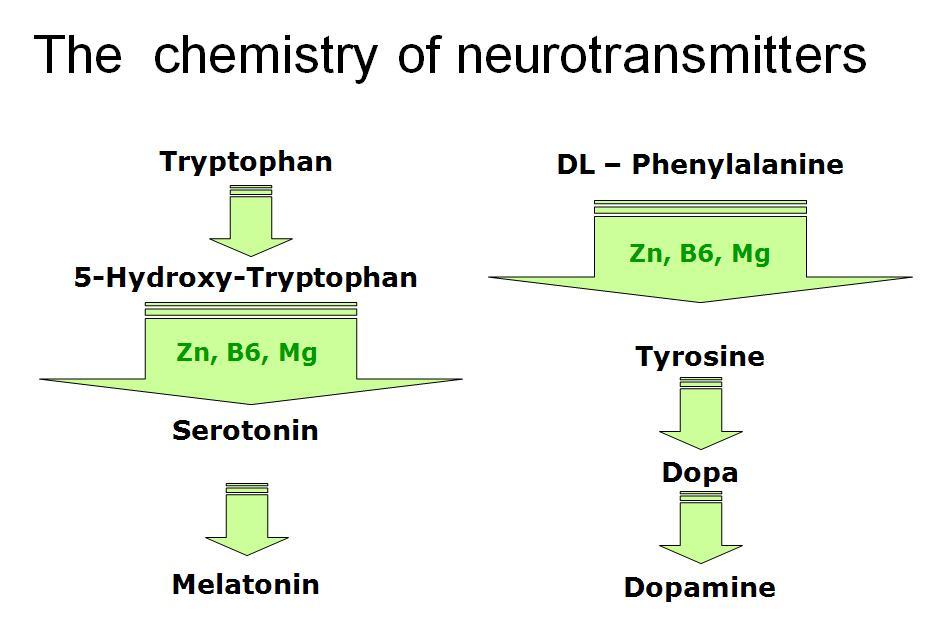
B Vitamins Are Necessary For Neurotransmitter Production
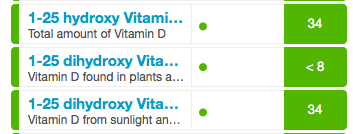
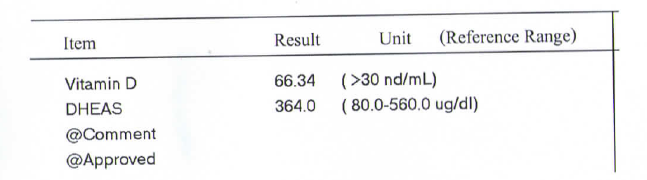
If you have a Vitamin D deficiency, this is going to affect your body’s functioning in more than one way. It can also cause depression. I had this problem. Using supplementation brought my Vitamin D levels up into the optimal range, which did wonders for my mood.
Was lower than 34 before this test. I was still working on raising it.
This is after supplementing with Vitamin D and correcting my DHEA levels
Other researchers are finding that people can develop depression simply by eating foods they are allergic to. Two of the most common allergens that you might have heard about are gluten and dairy.
There are people that find that just by cutting out gluten they find their depressive symptoms vanishing.
Many people get depression or mood swings because of eating too much sugar or starchy carbohydrates. The rapid changes in blood sugar levels can affect mood dramatically.
These people can often find relief simply by eating more protein (supplying more amino acids, the building blocks of neurotransmitters), eating more healthy fats (the human brain is nearly 60% fat), and replacing their morning cereal and starchy treats with foods like vegetables, yams, or occasionally fruit.
What’s the message here?
It Is Possible To Beat Depression
You just have to find out the root cause that is making you depressed and correct it.
Want to know how to overcome depression? Here’s the formula:
Step 1: Figure out why you are depressed.
Step 2: Correct the root cause(s).
Okay, I get it. If you knew why you were depressed you’d already have begun working on fixing it.
My question to you is, have you let go of all your preconceived notions about depression, and really allowed yourself to dig deeper and do whatever it takes to figure out why you’re depressed? Have you looked at all the other ways to correct it?
My Promise To You
Yes, it is possible to feel good. Depression is not forever. Remember that depression places a “filter” over your thoughts. I know that even as I am writing this blog post, if depression has that filter up over you, a lot of this isn’t going to register until you finally feel better.
This filter produces all-or-nothing thoughts, and the biggest one is that you are going to be this way forever. Psychiatrists told me that all the time. They said I had a lifelong “disease” and would have to take antidepressants for the rest of my life.
Guess what? I don’t even take many supplements anymore. I feel great.
Listen, if you make it an absolute commitment to overcome your depression and find the root cause for why you are feeling the way you do, and do that no matter what, you cannot fail. You will find the solution. I promise you that.
I had food allergies, wasn’t eating healthy at all (but thought I was), didn’t eat enough fat, had low Omega-3 levels, had burnt out adrenals and depleted B Vitamins from stress, and had a magnesium and Vitamin D deficiency. I corrected it all with diet, supplementation, and using amino acids to get off Celexa and bring back my levels of serotonin and dopamine naturally without drugs.
What If I’m Too Depressed In The First Place To Do Anything?
Let’s return to the dark cycle of depression. You feel like crap because you are depressed, yet you don’t have any willpower or energy from the depression to get up and do something about it.
I’ve found that the trick is to find just a tiny bit of relief. Whether that is through taking amino acids to bring your mood back, correcting your sleep, or eating a little bit healthier so you get that tiny little increase in energy. Once you begin on the journey and learn more and more about yourself, it will only be a matter of time until you get to the root cause of your depression and start feeling great.
The key is to forget everything you think you know about depression and start looking at your symptoms. Take those and take the most likely solution for your current symptoms and go at it. Don’t stop until you are cured.
You can do this with or without medication. That is your choice. My personal experience is that antidepressants and medications have unknown long-term effects, don’t positively affect 5-HIAA levels which have been shown to be just as important as things like serotonin for mood, and the withdrawal effects are horrendous.
I also used to work in a clinical research facility. Behind the scenes, there is a lot that goes on to quickly pass off drugs as safe so they can hit the market.
Whatever you choose, just know that yes, it is possible to beat depression. You don’t have to live like that forever.
Feel free to comment below what your own personal journey has been, any questions you have, or shoot me an email. I’ve been there.
If you want a risk free proven system to find relief without medication or having to rely on positive thinking, find your root cause and begin fixing it, I’ve developed a course to help you do just that.