Archive
Category Archives for "Dominate Brain Chemistry"Brain chemistry plays a big role in certain types of depression. Learn how to get your brain producing those feel good neurotransmitters.

Brain chemistry plays a big role in certain types of depression. Learn how to get your brain producing those feel good neurotransmitters.
How do you know if you feel bad because you have situational depression or if there’s something wrong with your brain and body?
Do you feel bad because you are going through a bunch of life transitions, you just lost your job, and are fighting with your spouse? Or is it because you aren’t eating right and your sleep is messed up?
The answer is, it depends.
It’s not always so black and white.
This video and post will go over the difference between situational and biological/physical depression and how they interact with each other.
However, some people have everything working properly in their bodies but events in their life are causing havoc on their emotional state.
For example, one of my best friends just died and it was probably suicide, I just learned that I am now struggling with bartonella or possibly lyme disease, I’m in a new town with hardly any friends, and under a lot of stress.
I felt really down, overwhelmed, sad, low energy, for a good 2-3 weeks. I felt out of control with everything going on and dealing with all the stressors. As I worked through the situation, despite nothing changing physically, the cloud starts to lift and the darkness goes away.
This could be you if you are moving to a new town, going to a new college, and having fights with your parents. This could be if you are having a major breakup. This could be if you just lost your job and you aren’t sure what you are going to do next.
Situational depression is when your external circumstances affect how you feel. It resolves itself through working through the problem, getting help, acceptance, feeling emotions, changing your cognitive thoughts, etc.

You Can Be a Hollywood Celebrity & Still Feel Depressed
Situational depression is vastly different from biological depression. With biological depression, you would be trapped in a state of depression regardless if whether or not you were living in a mansion with no worries or if you had every worry in the world.
For example, if you had a severe magnesium deficiency, you could be depressed with anxiety for years until you resolve the magnesium deficiency. It doesn’t matter how great your life is, your body needs more magnesium to be in balance and function properly.
Having depression that is biological means that your brain isn’t going to work right no matter what you do in the external world. It doesn’t matter if you are jumping out of a plane if you’re deficient in amino acids and b vitamins, your brain won’t even be able to produce the neurotransmitters to feel any pleasure at all.
I had depression really bad for about 11 years. At first, I thought it was all my fault and that my life just sucked. I tried riding a fast motorcycle, skydiving, running a marathon, etc. and I never felt happy at all. I did all the therapy in the world and still didn’t feel any different.
That’s because physically my body wasn’t working right. It would be like having a really good map, great friends as passengers in the car, and trying to get to a different state when your car’s engine has a leak. It doesn’t matter how many friends you have with you, or how much money you have, you aren’t getting to your destination as long as the car (your body) isn’t running properly.
This is also why antidepressants tend to work really well for a short-time, because they are changing what is happening inside your body, and therefore you see the world completely differently.
Unfortunately, they often come with a lot of side effects and in the long-run don’t solve the root problem. Then you are left still feeling horrible and now you have to deal with weaning off the antidepressant.
Solving the actual root causes of your depression can come in many different forms, from vitamin/mineral deficiencies, being allergic to certain foods, hormonal issues, etc.
When you have situational depression, you can fix the depression by changing your mindset or your lifestyle. If you have depression that is caused by physical root causes, it can only be fixed when you fix the root causes.
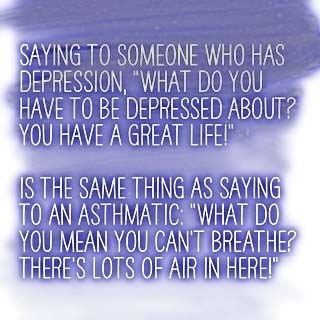
Sometimes I have people ask me if they should be doing therapy also. The answer is always yes, if it helps you. Getting as much help and support as you can is always a good idea.
Depression isn’t always just 100% situational or 100% biological.
Being physically depressed to where you have no energy can make it so you miss days at work. This causes you to lose your job. You then dig yourself into a hole and lose touch with friends, and now you are in both a physically and situationally bad place.
If someone you love dies and you lose your home, the stress can wear you out. Being worn down can cause you to become depleted of b vitamins, and now the situation just caused your body to break down and physically it isn’t running properly.
Both your situation and your physical state play into each other. You can have situational depression and biological depression. They interact. You always want to be able to attack depression from all angles.
The only thing I have noticed, however, is that society as a whole has done a really good job at providing resources for helping people with situational problems, and very little on fixing the root causes physically.
If someone has physical root causes, it doesn’t matter how much therapy you do. No matter how many hours you spend with a therapist, that won’t change a vitamin d deficiency. You just need to take vitamin d.
You want to attack depression from all angles. Get as much of the right type of support as you need and make sure you are fixing the physical root causes simultaneously.
Make sure that when you start to feel good, don’t let all your good habits drop. Keep doing what you need to do such as supplementing with the right supplements, getting tests done at the doctor, eating healthy, etc.
We are sold on the idea of quick fixes and band-aid solutions. One quick cognitive trick to feel better in 30 seconds! One little blue pill that will solve all your problems!
The truth is, that can work for a short while, but it’s never long-lasting. I get probably 3-5 emails every single day from someone that has been on antidepressants for a few years and now they feel worse then before and are dependent on a medication. Then we have to wean off of it which is hard and painful.
Instead of quick fix, think of fixing the root causes and building a base of solid nutrition so your body can function right.
 Most people that find my site are searching for ways to get off their antidepressants.
A lot of these people are searching because they tried to get off and they failed.
Getting off antidepressants can be tricky. It’s best to have a solid game plan to maximize your chances for success. The first time I tried to get off Celexa I failed miserably.
The following is a guest post by Cari Nadeau who had emailed me telling me that she had successfully healed from major depression and anxiety.
Enter Cari:
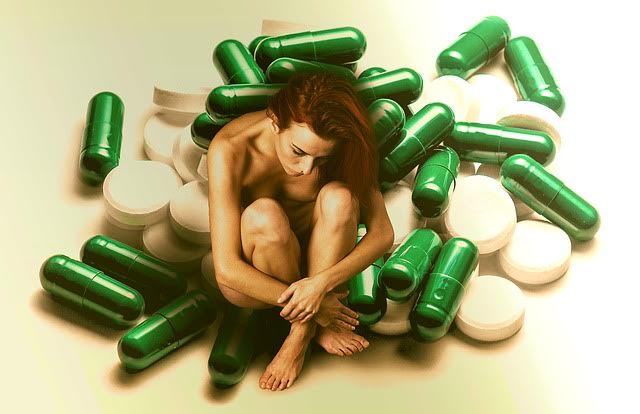
Ask your doctor about getting off of your antidepressant and they will probably tell you to cut down incrementally over a couple of weeks. No preparation, no backup plan, no nutritional fortification. Nothing. This makes me absolutely irate…because then comes the inevitable ‘relapse’ into depression (which is actually drug withdrawal, not depression) and the hopeless feeling that you will be on a drug you don’t want to be on for the rest of your life.
I’ve been there and it’s a horrible experience. Everyone around you just wants you to go back on the drug because they can’t stand to see what you are going through trying to get off of it. They’re afraid you might hurt yourself. YOU’RE afraid you might hurt yourself. No one around you understands that you are actually experiencing drug withdrawal because of the changes the drug has made to your brain.
It doesn’t have to be this way.
Your psychiatrist or MD won’t have the answer to this problem. But Dominate Depression does.
Here are the six things I wish I knew before trying to get off of antidepressants:
Use a compounding pharmacy to help get off your antidepressant slower. Compounding pharmacies are pharmacies that will custom make medicines for you. This enables you to cut down VERY slowly and steadily by TINY doses. If you can’t find one close to you, you can find one to order from online. Your doctor needs to call in the prescription, just like a regular pharmacy. You can also find out if the med you are on is made in a liquid form, which might be available at your regular pharmacy.
Slow and steady wins the race. I’ve seen taper plans that recommend cutting down by 10% at a time, which is infinitely better than the usual 25% at a time your doctor will tell you to do. But, do whatever feels right to you. There’s no rush. The slower you go, the greater your chances of success will be, especially if you have been on antidepressants long term.
Get your diet on track to support maximum healing potential of the body and brain. Avoid the foods that are exacerbating any inflammation or immune dysfunction in the body. In many cases, that will include things like gluten, dairy, alcohol and sugar. There are many other foods that can cause immune problems. The best way to figure it out is by doing an elimination diet. Also get as many toxins as possible out of your environment. Things like chemical house cleaning products and body care products will just add immune stress to the body.
Fortify with supplements and amino acids well before you start your taper to be fully prepared. Taking the right amino acids in the right doses can make a world of difference during the tapering process. Also, as this is a time of stress on the body, a good multivitamin, extra vitamin D, fish oil and/or cod liver oil and probiotics are crucial. I also think turmeric is a great supplement for anyone dealing with depression because of its potent anti-inflammatory properties.
Not following the proper protocol could mean ending up right back where you started because your brain needs LOTS of time, healing and patience to repair what the drug has done to it. Take the precautions seriously and do it right the first time.
Energy work can help minimize symptoms and support the healing process to make it easier and more successful. It can improve your health and life overall and for some can heal depression if the root is from an emotional or energetic cause. Getting off antidepressants can be a sensitive process and it can help to allow yourself to process what you are experiencing.

Depression is curable. TJ’s site is an amazing resource that I recommend to people who are looking for ways to heal depression. It’s just a matter of taking action, finding the source of your symptoms and applying what you have learned. I realize that this is no small feat when you are depressed…everything feels overwhelming…but just reach out and I am here for you.
Cari has her own site at CariOnPurpose.com where she shares about her healing journey if you want to get in touch with her.
 Most people don’t realize that there are different kinds of depression and why 5-htp or phenylalanine could produce vastly different results for different people.
When some people are depressed, they have really dark thoughts, become obsessive, and hate themselves.
Other people describe their depression in a very different way.
These people say they feel numb, like life has flatlined.
They have no motivation, don’t feel pleasure, don’t want to get out of bed, and life is sort of just “gray”.
L-phenylalanine or DLPA are amino acids that are used primarily to help people that have no motivation, feel numb, or sensitive.
Every amino acid can occur in two forms, except for glycine.
Your body primarily just uses l-amino acids, and that is why DLPA is unique as a supplement.
Taking DLPA will produce different effects and depending on what type of depression you have, you will most likely react better to one or the other.
L-phenylalanine can help increase your pleasure. It is needed to form endorphins and helps to produce PEA (phenylethylamine). It is found in protein such as animal proteins and fish.
It is also converted into tyrosine. Tyrosine goes on to produce neurotransmitters such as dopamine, epinephrine, and norepinephrine.
DPA is a bit rare and is the mirror image of l-phenylalanine. D-phenylalanine helps stop the enzymes that are responsible for breaking down endorphins so that the endorphins are allowed to build and expand.
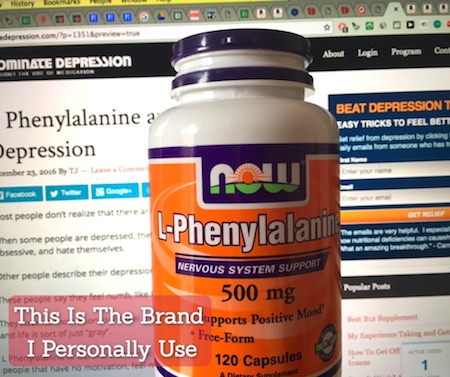
L-phenylalanine can be great for people that are low in catecholamines such as dopamine and epinephrine and is a great alternative to tyrosine. A lot of people say that tyrosine makes them jittery or feel tense. L-phenylalanine also helps produce pleasurable feelings and motivation.
DLPA can be a better choice for someone that is overly emotional and sensitive, such as randomly crying for no apparent reason. DLPA can help boost endorphins more than just l-phenylalanine by itself.
DLPA would be a great choice if you need both energy and you want to increase your pain tolerance. DLPA is also a good choice for people that take l-phenylalanine and find that it gives them too much energy or gives them insomnia, as DLPA’s energy boost is more subtle.
Although a bit oversimplified, you can think of the d- form of phenylalanine as being more of the “painkiller” and the l- form of phenylalanine as being more of the “energizer”.
Phenylalanine side effects and DLPA side effects are very similar. If you have migraines or high blood pressure, be careful taking either supplement. Both DLPA and l-phenylalanine can cause migraines or slightly increase blood pressure.
Some common side effects include anxiety, jitteriness, or hyperactivity.
Rare side effects can include itching, mouth tingling, or swelling of the hands of the feet (these are rare).
Always take the smallest dose possible and then slowly increase it when you know that you react well to it.
If you are taking antidepressants, you need be especially careful while taking amino acids. You can read how to take amino acids while on antidepressants here.
L-phenylalanine and DLPA are best taken on an empty stomach and in the morning or early afternoon. If you take them too late in the day, it can cause insomnia.
Buy the smallest dose of l-phenylalanine or DLPA (depending on which one you expect to work better for you, see above) and take it in the morning without food. After 30 minutes, you should feel something. If you don’t, you can take another capsule until you reach the desired effect. If you feel negative effects, you can stop there.
Taking DLPA or l-phenylalanine can help raise endorphins and norepinephrine levels, which can take away some of depression’s effects on your mood and thoughts.
With either amino acid, you can take them for as long as you need them. The good thing about amino acids is that after you take them for a while, you won’t need to take them anymore. It is generally recommended that after you finish a bottle, try going a few days without it to see how you feel. If your mood drops significantly, resume using the amino acid until the next bottle is up, then you can see what happens when you stop taking it.
This is different than taking traditional medicine, which can cause withdrawals and dependence. It can be excruciatingly hard to get off antidepressants for example.
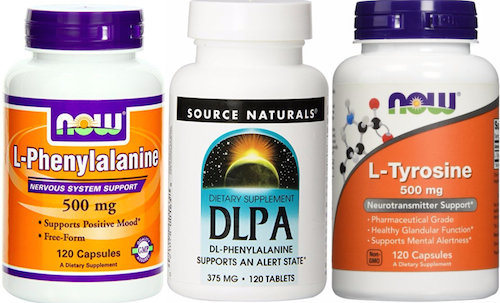
I have taken l-tyrosine, DLPA, and l-phenylalanine. I personally react better to l-phenylalanine. It gives me that sense of calm focus, the type of motivation where getting stuff done is pleasurable but you don’t feel all crazy at the same time.
L-tyrosine gave me inner tension and made me feel aggressive in an odd way. The only time that l-tyrosine worked for me was when two weeks before moving to Thailand after selling all my belongings and buying a one way ticket, I shut down from the stress. I used l-tyrosine to let me function and actually get up in the morning. Once the burnout started going away, it gave me the same high tension aggressiveness as it normally does.
DLPA made me feel different, but something was just a bit off.
L-phenylalanine made me more positive, more focused, had increased pleasure, and increased motivation.
There was a time when I actually used l-phenylalanine to keep going towards the end of the month when I was selling solar to hit my goal. I was starting to lose focus and used it the last weekend by taking one capsule, taking out just a little bit of the powder, and taking small doses throughout the morning and afternoon. I was the top direct salesperson for the entire country that month.
I don’t recommend using l-phenylalanine or DLPA to keep going when you need to rest, however, they should optimally be used to help you get back on track and function.
My experience also shows how important it is to realize that each person will react differently to amino acids. One person will do well with tyrosine, another person that experiences a lot of emotional sensitivity will love DLPA, and another person will like l-phenylalanine.
I personally would recommend that you try l-phenylalanine first, as it can produce more beneficial effects and is converted into l-tyrosine anyways. However, most resources and books say to try l-tyrosine first before trying l-phenylalanine or DLPA.
I always purchase supplements from Amazon or iHerb. I have used both NOW Foods and Source Naturals. Both are really inexpensive, with l-phenylalanine usually around $11 for a bottle and DLPA around just $9 for a bottle.
If you’ve ever taken any of these amino acids before, let us know in the comments what your experience was.
One of the most common questions I am asked is if you can take amino acids while on antidepressants or while weaning off of them.
The answer is, yes, but with caution.
Amino acids can be used to either enhance the performance of an antidepressant or to help you get off antidepressants without going through extreme withdrawals.
Before we begin, you might be wondering why I’m asked about this so often.
 If you’re reading this, you are probably like most people who went to the doctor, complained about depression, and was given a prescription for a medication to fix your problems at one point.
Most people that find my site search in Google to learn about how to deal with the negative effects they are experiencing taking an antidepressant. Antidepressants can be hard to withdraw from, and a lot of times people still feel depressed or anxious while on them.
Interestingly enough, while SSRI’s and antidepressants are powerful, they usually never completely fix the problem for people or they only help people for a short duration of time.
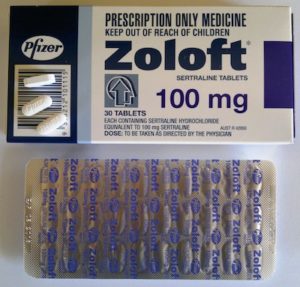
The most common type of antidepressant, SSRIs, prevent serotonin from going into reuptake mode. This means that you don’t actually have more serotonin, you are just using the small amount more.
The problem with this is that that small amount of serotonin can no longer be converted into melatonin or 5-HIAA.
According to the book The Mood Cure by Julia Ross, 5-HIAA may be just as important as serotonin for your well-being! Studies have been done that have shown that reduced levels of 5-HIAA have resulted in destructive moods, violent crime, suicide, insomnia, and addiction.
Most people that struggle with mood problems have both low serotonin and 5-HIAA. Antidepressants often act as a band-aid, and don’t fix the problem.
Not only that, according to physicians writing for the New England Journal of Medicine, “51% of approved drugs have serious side effects not detected prior to approval.”
I believe that antidepressants should be a last resort, rather than the first option, for these reasons.
However, if you are taking an antidepressant, you can either take amino acids while continuing your antidepressant, or you can use amino acids to wean off of your antidepressant (which is more common).
Most people are looking to wean off their antidepressant. However, many people use amino acids to enhance their current medication’s effects.
In a British study that looked at severely depressed patients on an SSRI called Serzone, when people took tryptophan with Serzone their depressive symptoms dropped more than 50 percent.
5-htp and l-tryptophan are amino acids that aid in the production of serotonin. If you are taking an SSRI (see table below for common antidepressants and their function) then these two amino acids can help you actually produce more serotonin and have it work better.
L-tyrosine is an amino acid that helps produce more catecholamines. Some people that take SSRIs complain of side effects such as being tired, low sex drive, low motivation, etc. This is because SSRIs can deplete the levels of catecholamines. L-tyrosine can help eliminate some of those side effects.
If you decide to take amino acids while on antidepressants, make sure that you take the smallest dose possible to see if there are any negative effects first before increasing the dosage. That way you can catch any bad interactions early and not suffer from negative side effects.
When you take amino acids and antidepressants at the same time, aim to take them 6 hours apart so they can work individually. When you take amino acids, also make sure that you take them on an empty stomach, otherwise they won’t work because they will be competing with all the other amino acids you take into your body when you eat protein.
Before you begin the process of weaning off an antidepressant, make sure that now is the right time for you.
In my popular post, How To Get Off Antidepressants Without Going Insane, I talk about how I waited until I didn’t have as much stress and responsibility in my daily life to start weaning off just in case I experienced bad side effects. This way my life wasn’t negatively impacted and I didn’t have to worry about performing in too many roles.
Always take the smallest dose possible while you are experimenting with amino acids while on antidepressants to make sure you don’t experience any negative effects.
Buy the smallest dosage of the amino acid you can find. For example, 5-htp has many different dosages, but you can find it in a 50mg dosage. Then you can take that capsule and only take half.
Once you’ve done that successfully and everything went well, then you can take the full 50mg capsule. If that is OK, you can increase your dosage until you find that it is working well for you and stop there.
 SSRIs affect serotonin levels. If you take an SSRI, you will want to take either 5-HTP or tryptophan.
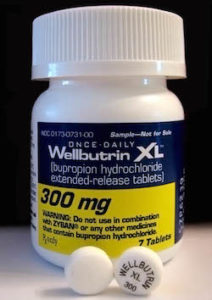
If you take atypical antidepressants or SNRIs, you will want to take either tyrosine, DLPA, or l-phenylalanine along with 5-HTP or Tryptophan if needed. SNRIs and some atypical antidepressants (like Wellbutrin) affect the brain’s norepinephrine levels. Tyrosine or DLPA with 5-HTP or Tryptophan can help restore these neurotransmitters back to healthy levels.
Common SSRIs include:
Common SNRIs include:
Atypical Antidepressants include:
For example, if you were trying to get off Celexa, you could first try a low dose of 5-htp and see how it affects you. If you get positive results, you can increase your dosage to the desired amount. If you take 5-htp and it doesn’t work very well, you can try l-tryptophan at a low dosage and see how that works.
Ideally take one of those twice per day, such as around 5:00 P.M. and before bed. If everything is going smoothly, begin to slowly taper off your antidepressant. While tapering off, you may find you need to take more of the amino acid to reduce the withdrawal symptoms, always being careful about how much you are taking and asking yourself if there are any negative effects.
Then once you’re off the antidepressant, you can keep taking the amino acid for a few months until you no longer need it, and use the foundation of beating depression naturally with food and nutrition to keep your moods stable and happy.
If you are taking an SNRI, you can use an amino acid to boost serotonin and an amino acid to boost catecholamines. Again, 5-htp and l-tryptophan boost serotonin while amino acids like l-tyrosine, DLPA, and l-phenylalanine boost catecholamines.
If you are trying to wean off of benzodiazepine or anxiety drugs like Klonopin, you can use specific nutrients for extra support such as GABA, taurine, inositol, and glycine to help your body naturally produce more of the calming neurotransmitters.
The most important part of the process is to go slow and use the smallest dose possible. Gauge the effects, and either switch strategies or increase your dosage if everything is going well.
Getting off an antidepressant can be a hard process, and I personally wouldn’t have been able to do it without using amino acids and nutrition to help me.
Comment below if you have any questions or want to share your journey.
Tears ran down my face uncontrollably.
Lifting one foot to place it a few feet forward felt like an enormous task.
I couldn’t recognize a single face on the train.
My home was a few blocks away, yet felt impossibly far.
Every cell in my body had given up on me. I had zero energy.
Heavier tears were somehow making their way out of my eyes as I began to sob in public, hoping that nobody would see me.
I open the door to my home and heard that familiar creaking sound. My living room came into view.
I took a step inside, and collapsed.
My mind raced with uncontrollable thoughts of anxiety.
I stared at the ceiling and told myself over and over, “You have to get up and eat something. You have to get up. You have to get up man.” Finally I get up. I look at the clock.
It was 2:15pm. It takes 30 minutes to get home from my internship. I left that internship at 11:00am.
I had been on the floor trying to get up for almost 3 hours.
I thought I could stop taking antidepressants cold turkey. I thought they were safe.
But in that pain while laying on the ground I made a new discovery.
Not only was I depressed, I was now dependent on medication.
I wanted to get off antidepressants because I had become “manic” from a recent increase in my dose of citalopram. Every couple months, the medication would stop working. My psychiatrist simply told me all I had to do was keep increasing the dose.
They said I was bipolar. Lithium didn’t work too well either. Looking back, the amount of citalopram I was taking was high enough to make anyone go a little crazy.
One thing was clear. Antidepressants weren’t the answer for my long-term health and happiness.
If you’ve found this page, you’ve probably decided the same thing for yourself.
The good news is, you can get off your antidepressant if you do it right.
Celexa withdrawals left me incapable of functioning. I was forced to continue taking it or become a vegetable.
I had to wait until there was a few weeks of no responsibilities to try again.
I loaded up with amino acids, vitamins, and an old bottle of lortab. I waited. And waited some more.
I got sick. Not sick as in mentally sick, but I caught a bad cold or virus.
That was my time to strike.
I cut my citalopram pills in half for 3 days. Then I completely stopped my dose.
Everyday I woke up I took Tryptophan with B-Vitamins, Tyrosine later in the day, and Tryptophan at night.
I felt severe pain. The combination of withdrawing from a powerful drug and being extremely sick was rough. Back then, I didn’t care and I took a lortab to help.
Lortab is not necessary to get off an antidepressant. I want to be honest and admit that I took a few lortabs during my withdrawal to escape the pain a few times.
I already knew what drug addiction was like. If I took lortab everyday, I’d have to wean off lortab also. That obviously defeats what I was aiming to do, which was be happy with no drugs.
Anyways, withdrawal from citalopram is bizarre. I relived old painful memories. I listened to music on my bed in the dark and drifted off to psychedelic realms as if I had taken a hallucinogen. I became sensitive to physical pain. Stubbing my toe or bumping my elbow felt 10x worse.
The weirdest phenomenon was getting “electric shocks.“I thought only people that went off Paxil experienced them. You might know them as Brain Zaps. Yes, they are real.
I would be walking around or drifting off to sleep and feel a distrubing sensation of a small electric jolt that felt as if it should hurt but didn’t. I swear I felt unconscious for a microsecond, almost like a mini seizure. It would sometimes travel from my brain to other parts of my body. It was slightly painful but had a very real, disturbing sense of unnaturalness about it, yet wasn’t painful at all.
Going off citalopram was a rough ride. I still remember what I experienced withdrawing from antidepressants to this day.
The first 2 weeks were insane, then it was clear skies from there. I didn’t feel good, but I was feeling better. A month and a half later, and I had recovered. I was antidepressant free and depression free.
I got the occasional “Brain Zap” for about two months (I capitalize the word on purpose as I respect its ability to mystify me). I got so used to them I remember realizing one day as I froze in the hallway and said out loud, “I haven’t felt one of those brain zaps in about a week!”
I was on my antidepressant for 7-8 months. If you are on a high dose or have been on an antidepressant for a long time, you will want to take things slower. It would be wise to do this with a doctor who is willing to support you in the process.
If you can’t really taper off for months at a time and don’t have a doctor to help you, this is how to do it. Be careful, listen to your body, and get back on your antidepressant if your situation becomes too paralyzing until you can try again. I happen to be a little extreme and wanted to get it over with.
Don’t try and go off your antidepressant when you are in the process of being promoted at work, your brother is getting married, and you have twins on the way.
You might lose your mind and it is essential that you have the proper environment to start your journey. If you can’t relax and be free of responsibilities for a while, stay on your antidepressant until you can.
You might “trip” while coming off. Pandora played a song called The Easterner by General MIDI who I’d never heard of before. I thought the song was teaching me the secrets of life. Serious.
I got sick with a cold and realized I was going to lay around in agony anyways. It’s better to find a week or two at full health, let everyone know you are going to be taking it easy, and start tapering off. If you can start tapering off without much harm, start that first. Plan your week of relaxation for when you come completely off your antidepressant.
Research as much as you can about amino acids and how they affect the brain. You can start with this website. Read through the articles, contact me, or sign up for the free email list.
The Mood Cure by Julia Ross has a wealth of information about amino acids and is where I began my journey. In fact, Julia Ross claims that she tapers people off of their SSRIs with no withdrawal symptoms. People say it can be hard to understand and implement the book while depressed, but if all you can do right now is walk to the library and start reading, pick this book up first.
Each amino acid affects people differently. My body and mind prefer l-tryptophan over 5-HTP. Most people respond better to 5-HTP. This is because 5-HTP skips a step in the conversion process to create serotonin. Leading practitioners in nutritional therapy try 5-HTP with people first, just don’t stop if 5-HTP doesn’t do the trick for you.
L-tryptophan is an amino acid that the brain uses naturally to create Serotonin. It does this by utilizing Vitamin B-3 to convert Tryptophan into 5-HTP, which is used in conjunction with Vitamin B-6 to convert into serotonin.
Amino acids compete with each other. You must take amino acids on an empty stomach. I made sure I had no other amino acids in my system by waking up first thing in the morning with a glass of water next to my bed. I’d take an L-Tryptophan with complex B-Vitamins, then meditate for a half hour before eating anything. I took Tryptophan at night to aid with sleep.
Your brain uses tyrosine to produce dopamine and norepinephrine. It didn’t help me as much, and actually revved me up to the point of making me manic, so I didn’t take too much of it. I later discovered that l-phenylalanine affected me more positively.
If you still have questions, click here for an entire article dedicated to taking amino acids while on antidepressants.
Your Antidepressant Tells You Which Amino Acids To Take Based On The Receptors It Affects
SSRIs affect serotonin levels. If you take an SSRI, you will want to take either 5-HTP or tryptophan.
If you take atypical antidepressants or SNRIs, you will want to take either tyrosine, DLPA, or l-phenylalanine along with 5-HTP or Tryptophan if needed. SNRIs and some atypical antidepressants (like Wellbutrin) affect the brain’s norepinephrine levels. Tyrosine or DLPA with 5-HTP or Tryptophan can help restore these neurotransmitters back to healthy levels.
Common SSRIs include:
Common SNRIs include:
Atypical Antidepressants include:
Research your antidepressant and find out which neurotransmitters it is affecting. Use 5-HTP or tryptophan to replace serotonin (SSRIs). Use tyrosine or DLPA to replace norepinephrine or dopamine (SNRIs or Atypical).
There is always a root cause for why you are depressed. Most people who question whether or not it is possible to beat depression haven’t yet realized that. This is a deadly cycle. Not taking care of myself caused me to become depressed and becoming depressed caused me to not take care of myself.
You get to break that cycle.
First thing you need to do is look at your diet.
If you’ve succumbed to the “low-fat” diet, start consuming large amounts of healthy fats.
Things like salmon, grass fed beef, avocados, fish oil, coconut oil, grass fed butter, etc. make your brain feel very, very good.
Why? Because your brain is made up of mostly fatty acids.
Start eating whole, unprocessed foods.
Check for food allergies. I went gluten free and saw a dramatic reduction in symptoms.
Eliminate sugars and vegetable oils. Sugar will wreck your overall sense of well-being. Sugar depletes your body of B Vitamins and nutrients. Canola oil contains too many omega-6 fats and is inflammatory, both of which can cause depression.
Some good places to start educating yourself on nutrition is here and here. Don’t forget about Johnny Bowden either
Start appreciating healthy grass-fed butter and coconut oil and foods that fuel your brain. Start to fear sugar and anything that comes in a “box.” Eat vegetables like they are going out of style, and eat them in the highest quality that you can.
If you’re not getting enough sun (which is pretty much everyone), start taking Vitamin D.
Once you’ve dialed in your diet, start experimenting with exercise. You probably won’t be able to do squats and deadlifts while coming off your antidepressant, but a short jog or walk in the sun sounds simple yet works.
If you can’t get yourself motivated to go for a walk, tell yourself that you will only do it for two minutes. After two minutes, you can go inside if you want.
Take baby steps towards getting your mind and body functioning right and you will thank yourself for the rest of your life.
If anything is confusing or you just don’t know where to start, contact me.
Prepare yourself for the voyage, rally up some of your close friends to have on call, and go for it. If you supplement with amino acids, eat healthy, get light exercise, relax, and have a support system, you’ll make it through the pain period and come out the other side healthier and happier.
If you do all the above and it still doesn’t work, you might have something else going on like leaky gut. Keep researching, keep listening to your body, get tests done by a doctor, keep searching until you find what you need.
I used to have insomnia. I corrected a magnesium deficiency and now I sleep like a rock.
I had slight adrenal fatigue which I corrected. I got my energy back.
These are common issues that a doctor or psychiatrist sadly never ask about. Instead, they ask you what powerful medication you’d like to start taking.
If you want true recovery, it is possible. Unfortunately with depression, the trial-and-error period can be extremely painful. It can be hard to figure out what to do when your in the midst of numbness and agony.
You may simply be eating gluten and you’re slightly allergic to it. You’re actually healthy, but don’t know how to communicate your needs properly to others. You think you’ve been getting enough sleep, but in reality you’re only sleeping 5 hours a night.
If you’re struggling to find real advice on how to recover from depression without medication, click Here for daily emails that give you truthful and actionable steps to feel like your old self again (plus a free bonus).
Let us all know in the comments if you have any other questions, thoughts, or ideas about living a life free from the side effects and withdrawals of medication. I wish you all the best.
A subscriber told me about her method for weaning off her antidepressant. You can use a bottle of water with milliliter measurements (can get one free from the pharmacy similar to a cough medicine bottle).
Make sure that your medication doesn’t use a film coating that gradually releases the medication into your body at a slow and controlled rate. If you dissolve or break these pills, it can destroy this slow-release seal. This would be counterproductive.
If you have checked that your medication is safe to do this, dissolve your medication in the bottle and depending on how much water is in it, you can take a very specific amount of your antidepressant.
Lets say you had a 5mg pill and a 50ml bottle. Once dissolved, every 10ml of water would contain 1mg of your medication. This way, you could slowly wean off your medication by taking 4mg a day, then 3mg, then 2mg, and so on.
You can really wean off it slowly and can even take half a milligram. You can keep diluting the 1ml in water and take 0.5 or 0.3 of a dose. This way, you can get off your medication with even less zaps or horrible withdrawal effects.